Evergreen: the Winter Medicine
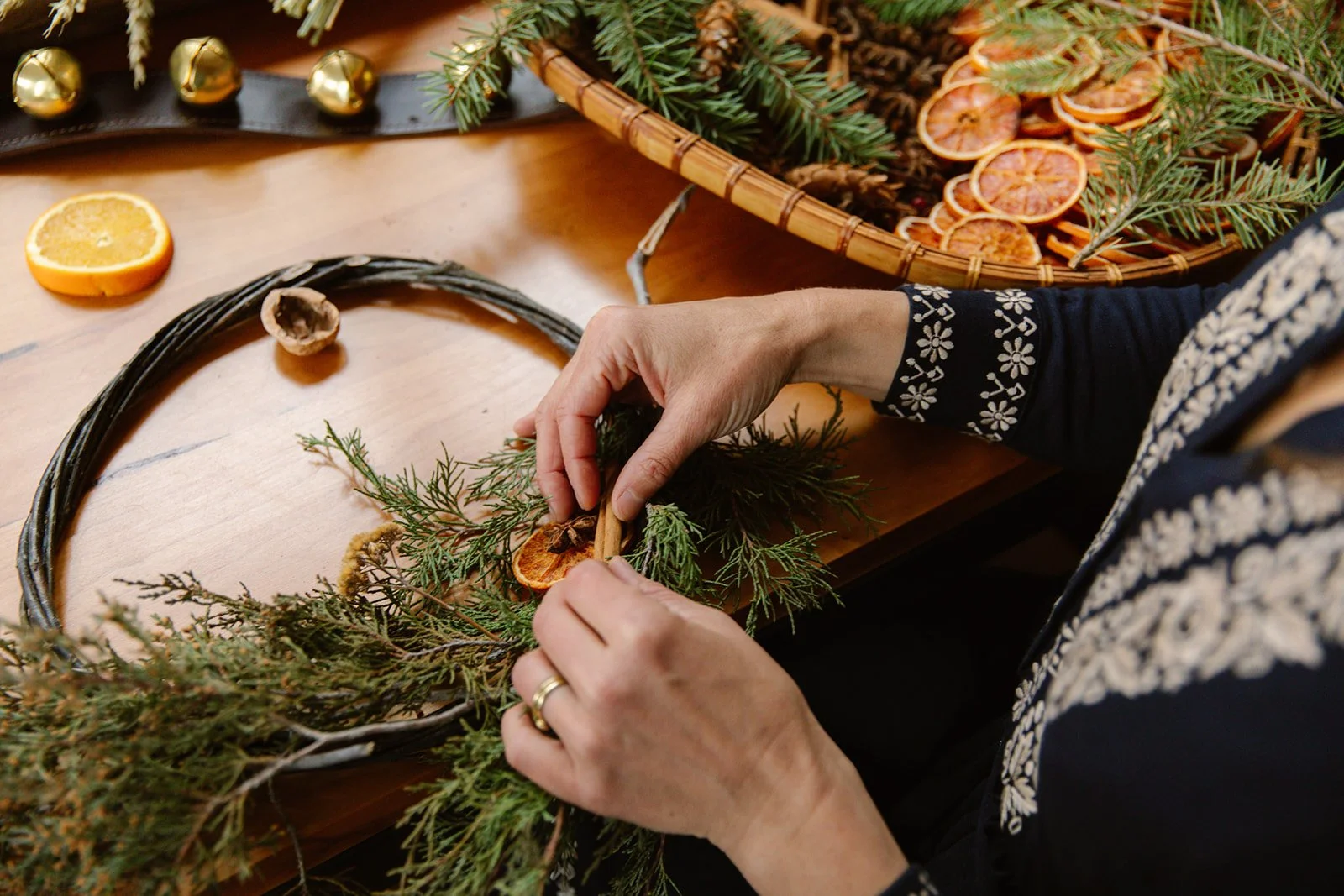
A Wreath Making Ritual
When people come to Mother Mountain to make wreaths, I hope they learn a craft—but also something deeper. My current curiosity is how humans stay well through ritual, culture, and connection to the natural world. Wreath making is a perfect place to explore this intersection: where physiology meets psychology, where spiritual practice meets daily habit, where ancient traditions meet modern science.

The Evergreen Tradition
Across the far north—among Celtic, Nordic, Scandinavian, Germanic, and Bavarian peoples—winter was never just a season. It was a force. Harsh cold, low sun, sickness, and scarcity shaped every aspect of life. People understood the world through an animist lens: the wind was a being, illness had spirit, and winter itself carried entities that brought fatigue, heaviness in the chest, restlessness, or misfortune.
Today we describe these same experiences mechanically: wind chill factor, seasonal depression, inflammation, vata imbalance, anxiety. Different languages for a similar human experience—but the older worldview kept people in intimate relationship with nature, rather than distant from it.
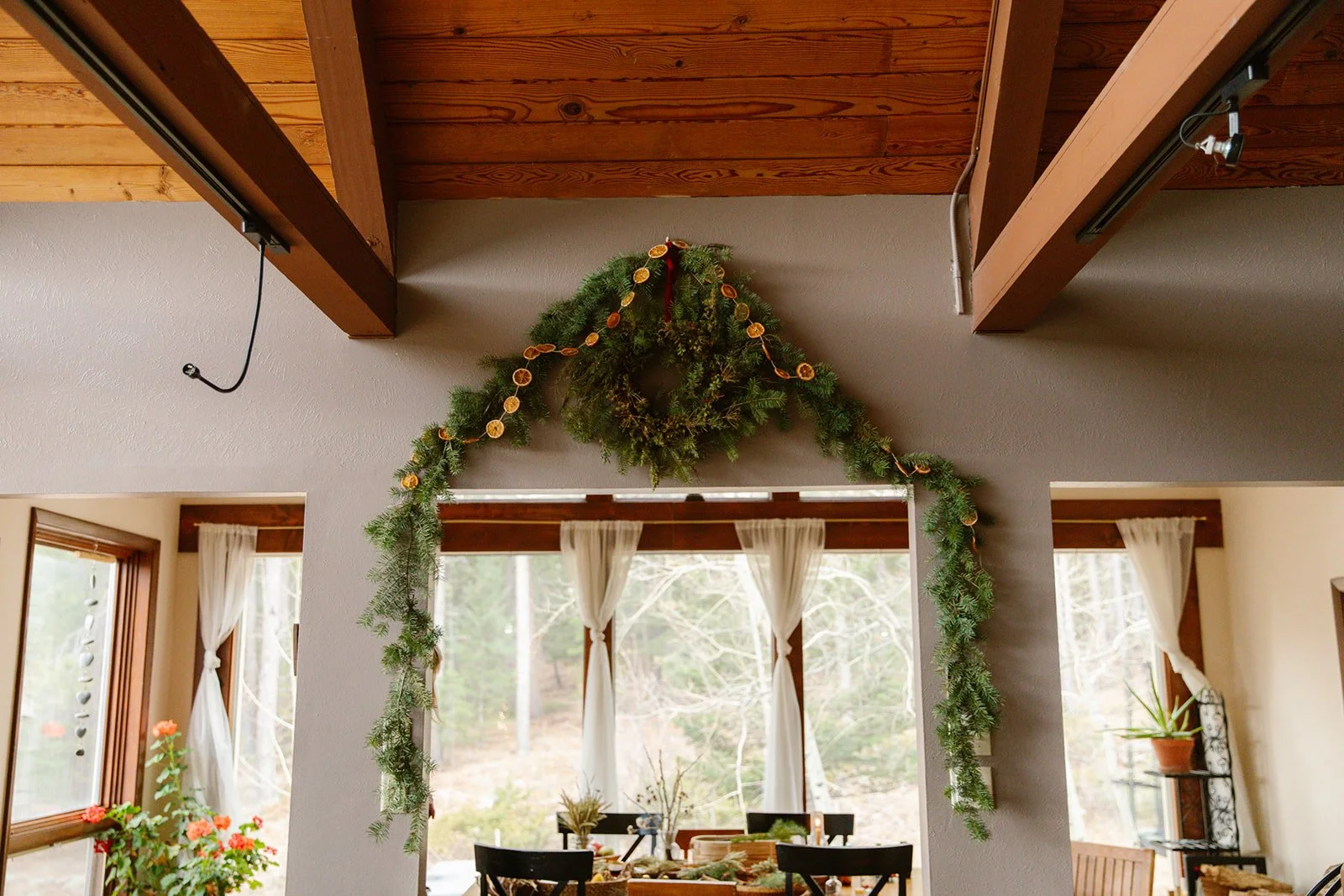
Evergreen Symbols
So why did people bring evergreen boughs into their homes? Because evergreens remain alive when the rest of the landscape dies back. They feed and shelter animals. They stay green through snow and deep frost. To our ancestors, they symbolized the continuation of life—the Earth’s water and fire elements holding steady in the dark months.
Evergreens were also protectors. Branches were hung at thresholds or burned to keep unwelcome winter spirits away. In Alpine regions, families tucked fir and juniper around barns and cradles during the Rauhnächte—the wild, unsettled Twelve Nights after solstice—to shield their homes from roaming winter forces.
And here’s the remarkable part: they were right in both mystical and biological ways.

Modern Knowing
The scent of evergreens—pine, fir, cedar—releases phytoncides: natural plant compounds that
lower stress hormones,
boost white blood cell activity,
support immunity,
improve mood,
and reduce inflammation.
Forest ecologists have measured the effect: even a brief walk among evergreens boosts immune function for days. These plants genuinely strengthen us—something our ancestors felt long before there was research to validate it.

Meaning Making
Modern life has preserved the decorations but forgotten the meaning. We hang wreaths as a gesture toward something ancient, but the ritual itself has thinned. Yet the longing remains. People want to feel rooted in something real—to make meaning out of the mundane and connect with the rhythms that once organized human life.
Bringing evergreens inside can be more than décor. It can be a practice of setting boundaries around what we welcome into our lives, a reminder of the sun’s inevitable return, and a way of tending our inner hearth through the dark months.
When you weave a wreath, you join a lineage of winter-keepers—those who carried life, hope, and courage through the cold.