Weaving Brigid’s Cross
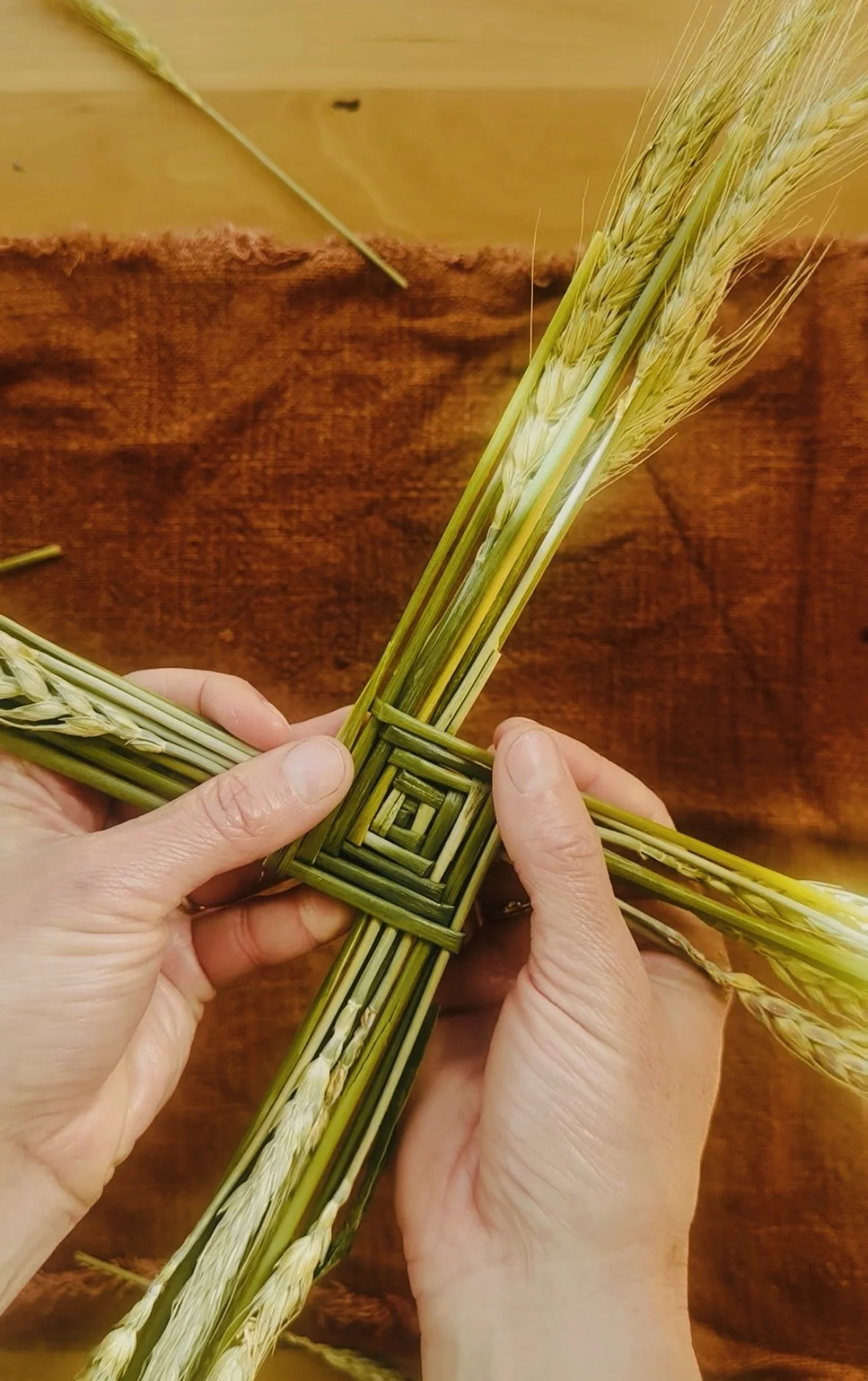
A Ritual Craft for Honoring Thresholds
The light has visibly returned, though winter still holds the land. Beneath frozen soil and snow-covered fields, something quiet and inevitable is stirring. This season is a threshold: when we are not yet in spring, but no longer fully in winter. A time of receiving rather than pushing, of listening rather than doing.
One of the most enduring ways people have marked this moment for centuries is by weaving Brigid’s Cross. Simple in form and humble in materials, the cross is a talisman. Not as decoration alone, but as a blessing to protect and sanctify the home for the coming year.
The Brigid’s Cross is an ancient symbol of protection, blessing, and renewal. Traditionally woven at Imbolc, it is placed at important thresholds of daily life. Often placed above doorways marking the transition from the outer world to our intimate homes. Frequently adorned near hearths and kitchens to invite healing from the fire and to bless the foods and medicines we make for ourselves and loved ones.
Each year, a new cross is woven. The old one id burned in the hearth fire or returned to the earth, acknowledging what had completed its work. This yearly renewal honors the threshold where the winter comes to its end making way for the new beginnings of spring.
The four arms of the cross are often understood to represent the four directions, anchoring the home within the wider world. The four elements, balancing earth, air, fire, and water. And the turning of the four seasons in the wheel of the year.
At Imbolc, when growth is still invisible, the cross becomes a symbol of trust. It affirms that life is already reorganizing itself beneath the surface, even if nothing has yet broken through. Transformation begins long before it is visible.
Weaving as Devotion
This is earth medicine: A moment to align with the season
Weaving Brigid’s Cross is a craft and it is a devotional act, a prayer made with the earth. The repetitive folding and turning settles the nervous system, draws the mind inward, and brings awareness into the hands. As the reeds cross and spiral outward, intentions come to life. As you weave invite blessings into each stock, set Intentions for boundaries, welcome healing, and honor what needs protection.
How to Weave a Brigid’s Cross
A step-by-step guide
Materials
8–12 pieces of rushes, reeds, straw, or wheat (If using dried materials, soak them for 24 hours or until flexible.)
A bowl of warm water (to soak dried materials)
String or thread
Step 1: Create the Center
Fold 2 reeds in half and link them together like a chain. Arrange the reeds into an L shape.
Step 2: Begin the Turn
Rotate the piece 90 degrees counterclockwise.
Fold a third reed in half and place it over the horizontal arm.
Turn the piece again and add a reed.
Each rotation mirrors the turning of the seasons.
Step 3: Build the Arms
Continue rotating and adding folded reeds one at a time.
After four turns, the cross shape begins to emerge, with arms spiraling outward.
Work slowly and recall your intention.
Step 4: Shape & Secure
When the cross feels full and complete, adjust tension in the arms so they are even.
Tie the ends with string to secure the cross.
Hold the cross for a moment. Feel the plants, to the season, and what is awakening in your life.
Step 5: Place the Cross
Hang your Brigid’s Cross:
Above the front door for protection
Near the hearth or kitchen for nourishment and healing
In a window or barn to bless what you tend and care for
Let it stand as a guardian through the year ahead.
Full Circle
When the next Imbolc arrives, return the old cross to the earth or to fire. Release what has completed its work. Make space for what is coming.
Then weave again.
Because devotion is not about permanence. It is about returning, year after year, to the quiet work of tending what matters.



This is traditionally an Italian Easter Bread. If you’ve been wanting to dip your toes into bread baking, this is a great place to start. It's an easy sweet bread and with a beautiful and unique result.